Family Systems Nursing in Mental Health Settings

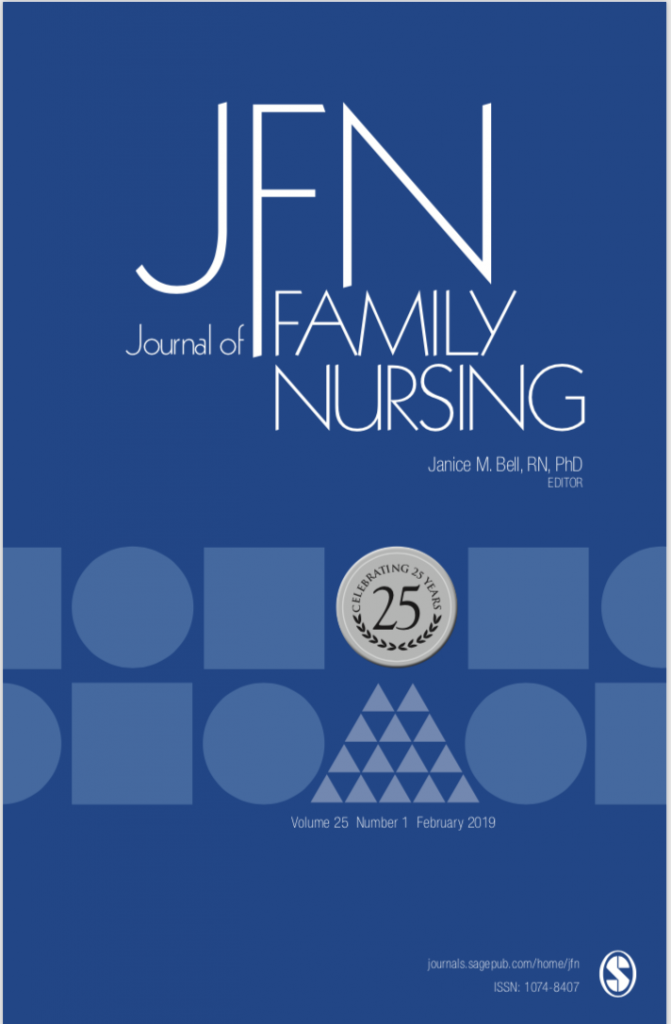
The challenges families experience when a family member is diagnosed with a mental illness have been documented in numerous studies (Bland & Foster, 2012; Gehart, 2012; Gerson & Rose, 2012; Robinson et al., 2012).   Living with a mental illness may result in physical, emotional, relational, and/or spiritual suffering for persons and families. A colleague recently asked about the recent published literature which documents the use of Family Systems Nursing in mental health care. My definition of Family Systems Nursing is explored in my 2009 Editorial in the Journal of Family Nursing called Family Systems Nursing: Re-examined:

  • Family Systems Nursing requires nurses to make a conceptual shift, even a paradigm shift, to account for interaction and reciprocity between health/illness suffering and family functioning, the interaction between themselves and the families in their care, and also consider the larger systems within which families and health care providers exist” (Bell, 2009, p. 126).
  • “The nurse, using Family Systems Nursing, is adept at assessing multiple systems levels and choosing interventions that target the systems level that offers the greatest possibility for health and healing, that is, the intervention might target the individual, the relationship between two or more family members, the relationship between the family and the nurse or other health care provider, the health care system, society and culture, or some combination of these” (Bell, 2009, p. 126).
  • Family Systems Nursing is a conceptual lens that directs the nurse’s conceptual, perceptual, and executive skills to focus on relationships, inquire about relationships, and offer assessment and interventions directed toward these relationships, regardless of who is involved in the therapeutic conversation in the immediate moment” (Bell, 2009, p. 127).
  • Family Systems Nursing occurs in a relationship between an individual/ family and a nonjudgmental nurse who prefers collaborative, nonhierarchical relationships and who believes in the legitimacy of multiple realities. A strengths-based orientation of the nurse moves the therapeutic conversation toward family competencies and strengths rather than toward deficits and pathology” (Bell, 2009, p. 127).

Here then is a list of published research reports and case studies which explore how Family Systems Nursing can guide care practices that nurses who work with this population of families can use. I am very proud of the work of my colleagues around the world who are using a Family Systems Nursing framework in their research, clinical practice, and educational contexts.   I have taken the liberty of including publications relating to grief and grieving, although I do not consider grief to be a mental illness. (more…)

My Manifesto: Weaving and Connecting

200_Weave-650x389Definition: “A manifesto is a published verbal declaration of the intentions, motives, or views of the issuer, be it an individual, group, political party or government” (Wickipedia).

My greatest desire is to move family nursing forward and change health care (assessment and intervention) to include the central influence that relationships have in health and healing. I am a registered nurse and a registered psychologist. In addition to a career in academia, I accepted an invitation from SAGE  Publications in 1993 to help develop a peer-reviewed journal for family nursing. In 2005, I helped organize a conversation between family nursing colleagues to begin the work of establishing an international family nursing organization. In 2010, I accepted an invitation to help organize a federally funded research conversation about knowledge translation of Family Systems Nursing within an international community of family nursing scholars and practitioners.

My lead roles are a being a WEAVER and a CONNECTOR: who can I connect? how can I help people promote their ideas for family health and healing? how can I create a web of relationships in the family nursing world to speed up connections and collaboration between family nursing colleagues? how can I speed up the spread of family nursing? how can I speed up the spread of family-focused, collaborative health care?  (more…)

Family Systems Nursing Knowledge Translation: Dr. Peggy Simpson

Dr. Peggy Simpson

Dr. Peggy Simpson

Peggy Simpson, RN, PhD, distinguished herself early in her advanced practice career by offering assessment, intervention, and evaluation that targeted knowledge translation (KT) of Family Systems Nursing and larger systems change. She conducted research about a unique KT knowledge to action process she implemented in Family Systems Nursing with practicing nurses in acute care and inpatient mental health settings at the Foothills Hospital in Calgary, Alberta, Castle Peak Hospital in Hong Kong, and, most recently, at Providence Health Care in Vancouver, British Columbia. Peggy received a BN degree and a MN degree in Family Systems Nursing from the University of Calgary and a PhD degree in Family Therapy from the University of Hong Kong. She has held academic appointments at Mount Royal College, University of Hong Kong, and University of British Columbia and is a Research Scientist at the University of British Columbia Faculty of Medicine, Center for Health Evaluation and Outcome Sciences. She co-developed a measurement tool that examines nurses’ perceptions of their family nursing practice. The Family Nursing Practice Scale has been used in research projects around the world and psychometric development is ongoing.

Peggy’s leadership in mentoring, coaching, and evaluating the process and outcome of KT in Family Systems Nursing has recently attracted the attention of local and provincial health care administrators. The British Columbia Ministry of Health recently conducted a survey of patient satisfaction and Peggy’s KT pilot unit at St. Paul’s Hospital in Vancouver received the highest patient satisfaction scores of all inpatient mental health units in the province of British Columbia. Members of Peggy’s KT pilot Inpatient Psychiatry Unit Team received a People First award from the Vancouver Coastal and Providence Health Care Health Regions for their leadership and excellence in person and family centered care. Providence Health Care has now made patient and family centered care one of their strategic foci for the next 5 years and has urged Peggy to continue to lead KT research initiatives in Family Systems Nursing.

On April 18, 2013, Peggy received an Excellence in Nursing Research Award from the College of British Columbia Registered Nurses for her outstanding work in knowledge translation research in Family Systems Nursing.


Selected Bibliography of Dr. Peggy’s Simpson’s publications related to KT in Family Systems Nursing:

Simpson, P., & Tarrant, M. (2006).  Development of the Family Nursing Practice Scale. Journal of Family Nursing, 12(4), 413-425. doi:10.1177/1074840706290806

Simpson, P., Yeung, K. K., Kwan, T. Y., & Wah, W. K. (2006). Family Systems Nursing. A guide to mental health care in Hong Kong. Journal of Family Nursing, 12(3), 276-291. doi:10.1177/1074840706291436

Vosburg, D., & Simpson, P. (1993).  Linking family theory and practice: A family nursing program.  Image: Journal of Nursing Scholarship, 25(3), 231-235. doi: 10.1111/j.1547-5069.1993.tb00787.x

What are the Clinical Practice Skills of Family Nursing?

What we do as family nurses is important work and doing what we do well is VERY IMPORTANT. It’s surprising then that while  many books and articles about family nursing exist, few identify or level the specific practice skills/competencies of family nursing. What is it that we actually do and do well?  My esteemed colleague, Lorraine M. Wright, first offered a very useful and detailed description of the unique clinical skills of family therapy which she co-authored with Karl Tomm in 1979 (Tomm & Wright, 1979).  Wright and Leahey (2013), across six editions of Nurses and Families:  A Guide to Family Assessment and Intervention, have continued to use a similar template to identify three levels of clinical practice skills that are central to family-focused nursing practice.  These three levels of family nursing clinical skill development, which I recently described in the language of learning objectives within an educational context, look and sound like this:

  • learn how to observe families and family members differently (perceptual skill development)
  • make better sense of what you observe (conceptual skill development)
  • learn how to engage families and family members in helpful conversations with skill and courage (executive skill development)

All three levels (perceptual, conceptual, and executive skills) are elements of an integral whole that help us understand the gestalt of “clinical practice skills of family nursing”.  Further distinctions could be offered between practice skills for generalist practice with families and practice skills for advanced practice with families. I would like to highlight specific publications of which I am aware that attempt to address the question, “What really are the actual clinical practice skills/competencies of family nursing?(more…)